Crimping DC Connectors: Safe & Professional Installation in PV Systems
Errors during the crimping of DC connectors jeopardize solar installations. Here is how to achieve a professional crimped connection, from material selection to quality control.
Crimping DC Connectors: Professional Execution in PV Installations
The quality of plug-in connections directly impacts the safety, efficiency, and lifespan of a photovoltaic system. Even minor crimping errors can have far-reaching consequences. Therefore, connectors, cables, and tools must be selected from the very beginning as a coordinated system.
Four parameters determine the selection of the appropriate connector: dielectric strength, current-carrying capacity, operating temperature, and conductor cross-section. The suitable solar cable is only determined after these parameters are established.
Tool Selection: Quality is Decisive
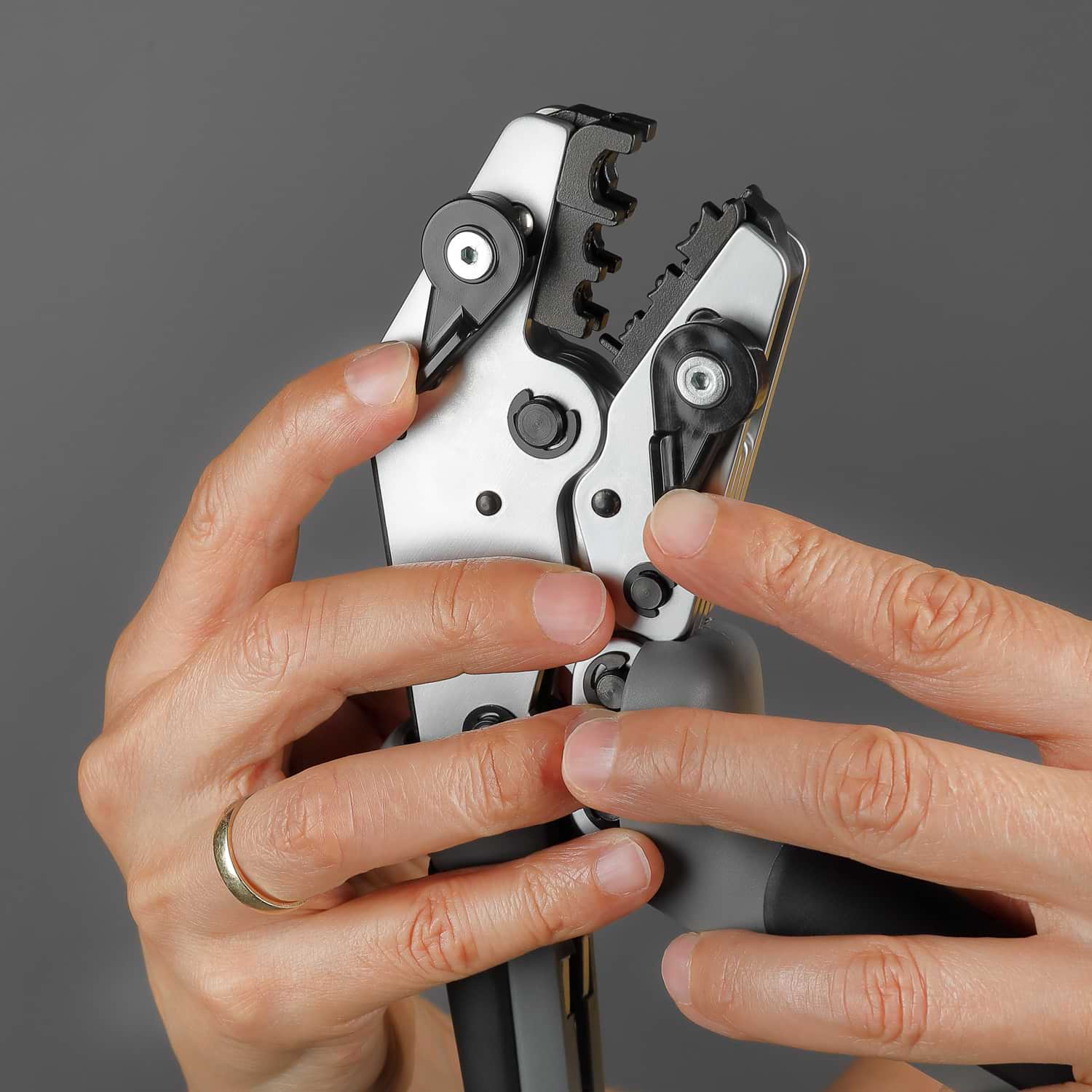
The quality of a crimped connection stands and falls with the tool used. Universal tools without explicit manufacturer approval are unsuitable for PV connectors. For stripping, only tools that automatically adjust to the cable cross-section and reliably protect the strands may be used. In addition, certified crimping pliers with a ratchet mechanism are required, which open automatically as soon as the specified pressing force is reached.
Stripping: Precise Length, Undamaged Strands
Depending on the connector type, the stripping length is between seven and ten millimeters. The critical factor when stripping is to ensure no strands are damaged or severed, and to briefly twist the strands afterward. If the stripping is faulty, the conductor must be cut off and the process repeated — damaged conductors increase resistance and can cause fire damage.
Crimping: Positioning, Pressure, Control
The conductor is inserted centrally and completely into the crimp sleeve.
The rule is: only the bare conductor portion may be crimped; the insulation must remain outside. The crimping pliers are fully compressed until the ratchet mechanism releases. Prematurely interrupting the process creates an incomplete connection, which can fail under thermal load, leading to a loss of contact or arcing.
Quality Control: Visual Inspection After Every Connection
Every connection must be inspected immediately after it is made. Correct crimped connections are symmetrical, firm, and shiny, with no loose wires, insulation residue, or contamination at the contact point. Only then is a secure positive fit guaranteed within the connector.
Conclusion
Professional crimping of DC connectors requires approved tools, coordinated materials, and qualified personnel. The final visual inspection is not an optional step but an integral part of the installation process.
Arnd Diedrichs heads the Product Management and Purchasing departments at EMC-direct and is an expert in tool development. The products of EMC-direct (Dorsten-based specialists in cable protection and fastening technology) are used in major solar projects in Austria and Denmark, among other locations.